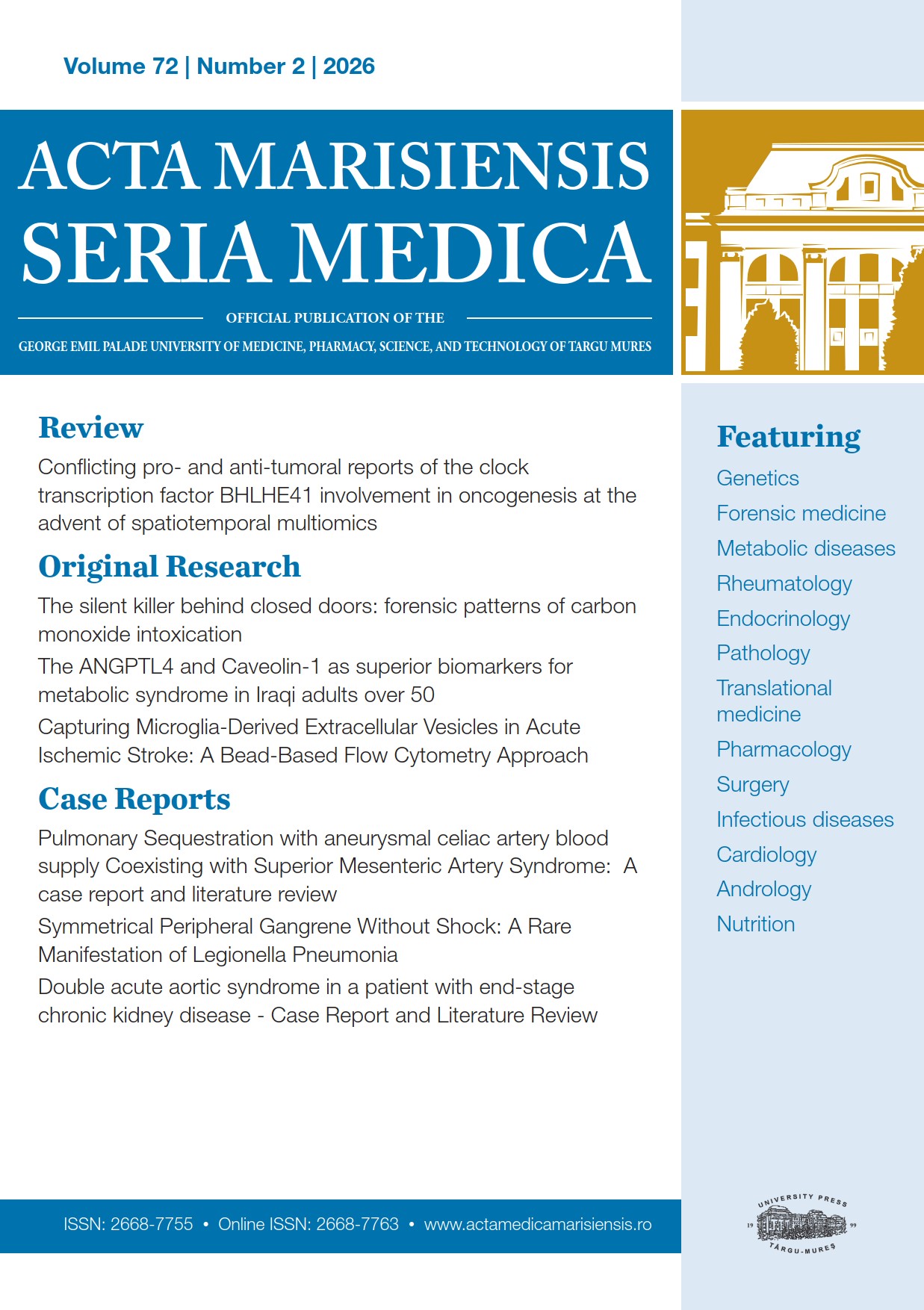
The silent killer behind closed doors: forensic patterns of carbon monoxide intoxication
DOI:
https://doi.org/10.62838/amsm-2026-0006Keywords:
carbon monoxide, intoxication, forensic medicineAbstract
Introduction: Acute carbon monoxide poisoning is a common cause of death during the autumn and winter months when various heat sources – some improvised – are used. It is often classified as an accidental rather than a voluntary intoxication. Materials and Method: This retrospective study includes a group of 25 individuals whose cause of death was acute carbon monoxide poisoning. The autopsies were performed between 2021 and 2024 at the Institute of Forensic Medicine from Târgu Mureș. Demographic parameters, toxicological results, the influence of the exposure method to the causative factor, and the correlation between alcohol consumption and carboxyhemoglobin concentration were analyzed. Results: Statistical analysis showed that 68% of the subjects were male and 32% female, with 44% originating from urban areas and 56% from rural zone. 60% of the individuals included in the study had carboxyhemoglobin concentrations over 50% at the time of death. The mean carboxyhemoglobin concentration for individuals involved in fires was 39%, compared to 52.22% for those caught in gas leaks; this represents a statistically significant difference between two mechanisms (p = 0.0282). The presence of ethanol in the blood was identified in 32% of the victims. Conclusions: Individuals involved in fires presented lower carboxyhemoglobin concentrations, suggesting the implication of other factors or substances in thanatogenesis. Similarly, patients with associated comorbidities had lower carboxyhemogolbin levels. Regarding the association with alcohol, the results suggest a possible potentiating effect of ethanol but this finding did not reach statistical significance.
Downloads
Downloads
Published
How to Cite
License
Copyright (c) 2026 Gaia Desiderio, Cosmin Carasca, Carmen Corina Radu, Timur Hogea, Ștefan-Alexandru Lungu

This work is licensed under a Creative Commons Attribution 4.0 International License.
Acta Marisiensis Seria Medica provides immediate open access to its content under the Creative Commons BY 4.0 license.